Buying a New Construction Home in Charlotte, NC: What to Expect in 2026
Buying a new construction home in Charlotte, NC looks nothing like buying an existing home. The process involves builder contracts, design selections, milestone inspections, and timelines that stretch 6–12 months — and buyers who go in unprepared often pay for it.
This guide walks through every stage of the new construction process in the Charlotte metro, including Fort Mill, Gastonia, and surrounding communities, so you know exactly what to expect before you sign.
What Is New Construction Home Buying?
Buying a new construction home means purchasing a property built from the ground up — or a nearly finished spec home — directly from a developer. Unlike a resale purchase, you’re often the first owner, with everything from the foundation to the fixtures built to current building code.
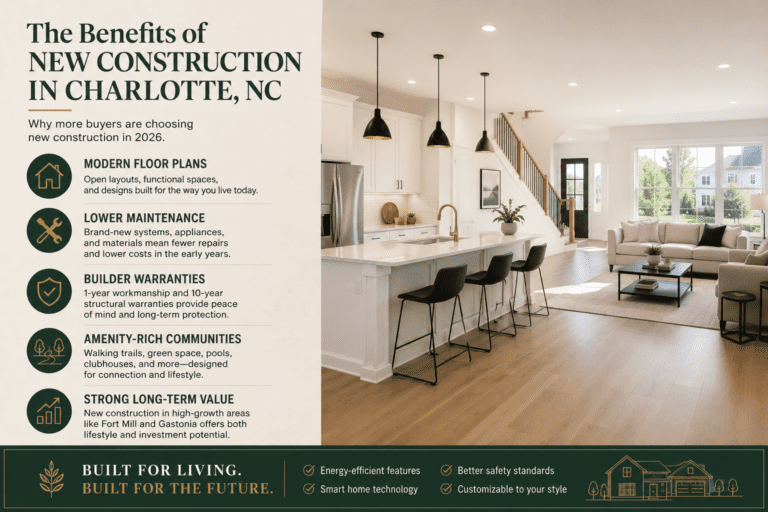
In the Charlotte metro, buyers choose new construction for three main reasons: modern floor plans designed for the way people live now, lower maintenance costs in the early years, and communities with amenities like walking trails, green space, and shared facilities that older neighborhoods weren’t built around.
Step 1: Choose the Right Builder and Community
Your builder is the most consequential decision in the new construction process. Reputation, construction quality, and warranty terms vary widely — and unlike a bad appliance, a bad builder is difficult to walk away from mid-build.
When evaluating builders in the Charlotte area:
- Check licensing and insurance. North Carolina and South Carolina both require residential contractor licensing. Verify active license status before signing a contract.
- Review completed projects. Visit finished communities and, if possible, speak with residents about their experience during and after the build.
- Compare warranty terms. Industry standard is a 1-year workmanship warranty and a 10-year structural warranty. Get specifics in writing, not just in the sales pitch.
- Ask about the builder’s current backlog. High-demand builders sometimes quote timelines they cannot realistically meet.
Local Communities Worth Knowing
Charlotte’s new construction activity clusters in several high-growth corridors:
- Fort Mill and Tega Cay, SC — Top-rated York County schools, lower South Carolina property taxes, 20–30 minute commute to South Charlotte.
- Gastonia, NC — More affordable price points than the city, with strong infrastructure investment happening in 2025–2026.
- Ranlo and Bessemer City, NC — Emerging markets delivering some of the best value per square foot in the Charlotte metro.
Step 2: Secure Financing Before You Sign
New construction financing differs from a standard mortgage. Most builders require a pre-approval letter before writing a purchase contract, and many have preferred lenders who offer incentives — rate buydowns, closing cost contributions — in exchange for using their in-house financing.
Key financing considerations:
- Construction-to-permanent loans convert from a construction draw loan to a standard mortgage at closing. These are useful if you’re purchasing early in the build when nothing is completed yet.
- Extended rate locks matter because builds take 6–12 months. Ask your lender what a float-down or long-term lock costs over that window.
- Builder incentives are most common on inventory homes — properties already built or nearing completion. Builders want these sold quickly and will negotiate.
Pro Tip: Charlotte-area builders in the $375,000–$500,000 range are offering the most aggressive buyer incentives in 2026. If your timeline is flexible, targeting inventory homes can mean free upgrades or builder-paid closing costs.
Step 3: Make Your Selections and Upgrades
One of the main appeals of new construction is the ability to customize before the walls go up. Depending on how early you purchase, you may select:
- Exterior finishes and home elevation
- Flooring, countertops, and cabinetry
- Lighting fixtures and electrical package upgrades
- Smart home technology
- Structural options such as bonus rooms, extended garages, or sunroom additions
How to Budget for Upgrades
Builder design centers are purpose-built to upsell. Set a firm upgrade budget before your design appointment and prioritize items that are expensive or disruptive to add after closing — structural changes, hardwood flooring, and custom cabinetry are all significantly cheaper during the build than as post-close renovations.
Light fixtures, hardware, and paint are easy swaps you can do yourself later. Don’t burn your upgrade budget on them at the builder’s markup.
Step 4: The Build Timeline Month by Month
What to Expect From Contract to Closing
Most Charlotte-area new construction homes take 6–12 months depending on permitting, builder backlog, and inspection timing.
Pre-Construction
Permits, site prep, builder contract, and final plan approval.
4–8 WeeksFoundation & Framing
The home structure takes shape, including foundation, walls, and roofline.
6–10 WeeksMechanical Rough-In
HVAC, plumbing, electrical, and major systems are installed before drywall.
4–6 WeeksDrywall & Finishes
Insulation, drywall, flooring, cabinetry, lighting, and interior details.
9–14 WeeksFinal Walkthrough
Punch list, inspection items, certificate of occupancy, and closing prep.
2–4 WeeksPlan for milestone inspections at the framing stage and again at pre-drywall. Both are critical windows to catch issues before they’re buried in the walls. An independent inspector at each stage costs $300–$500 and is consistently one of the best investments new construction buyers make.
Step 5: Final Walkthrough and Closing
Before closing, you and your builder’s representative will complete a formal walkthrough of the finished home. This is your last opportunity to document defects, missing items, or selections that weren’t installed as agreed.
At your final walkthrough:
- Bring a phone or camera and photograph everything.
- Test every appliance, outlet, window, door, and faucet.
- Confirm all upgrade selections were installed as specified.
- Document any incomplete items on the official punch list.
Do not close on a home with an incomplete punch list unless unresolved items are committed to in writing with a completion deadline and funds held in escrow. Verbal assurances from sales agents are not enforceable after closing.
Common Mistakes to Avoid When Buying New Construction
Not hiring your own buyer’s agent. The builder’s on-site sales agent works for the builder — not for you. A buyer’s agent costs you nothing (builders pay the commission) and negotiates on your behalf through the entire process.
Skipping the independent home inspection. New homes have defects. Structural issues, plumbing rough-in errors, and HVAC problems all surface during construction. Catching them while the builder’s warranty is in effect saves thousands of dollars in repairs.
Underestimating first-year costs. New construction communities frequently deliver homes without window treatments, landscaping, finished back yards, or outdoor living spaces. Budget $10,000–$25,000 for year-one additions that resale homes already include.
Not reviewing HOA documents before signing. Most Charlotte-area new construction communities have homeowners associations. Review covenants, restrictions, and monthly fees before signing the purchase contract — not after.
Frequently Asked Questions
How long does it take to build a new construction home in Charlotte, NC?
Most new construction homes in the Charlotte metro take 6–12 months from contract to close. Timeline depends on the builder’s current backlog, permit approval speed, and whether you’re buying early in the build or purchasing an inventory home nearing completion. Inventory homes can close in 30–60 days.
Do I need my own real estate agent to buy new construction in Charlotte?
Yes. The builder’s on-site agent represents the builder’s interests, not yours. Hiring a buyer’s agent protects you during contract negotiations, upgrade selection, and at closing — at no cost to you, since builders pay buyer agent commissions.
What is the difference between a spec home and a custom build?
A spec home is built by the developer on speculation — it’s complete or nearly complete when you purchase it, which means faster closing but limited customization. A custom build begins after you sign the contract, giving you more selection options but a longer timeline.
Is new construction in Fort Mill or Gastonia more affordable than Charlotte?
Generally yes. Fort Mill offers lower South Carolina property taxes and access to York County schools, making it one of the highest-value new construction markets in the metro. Gastonia consistently delivers the most affordable new construction price points in the Charlotte area, with strong upside as Gaston County continues to grow.